
Training is indispensable along with education; the fundamental framework of human creation is based on goodness — Address at the College of Shariah
Young people should make reading a regular habit for the purification of thought and consciousness — President Minhaj-ul-Quran International
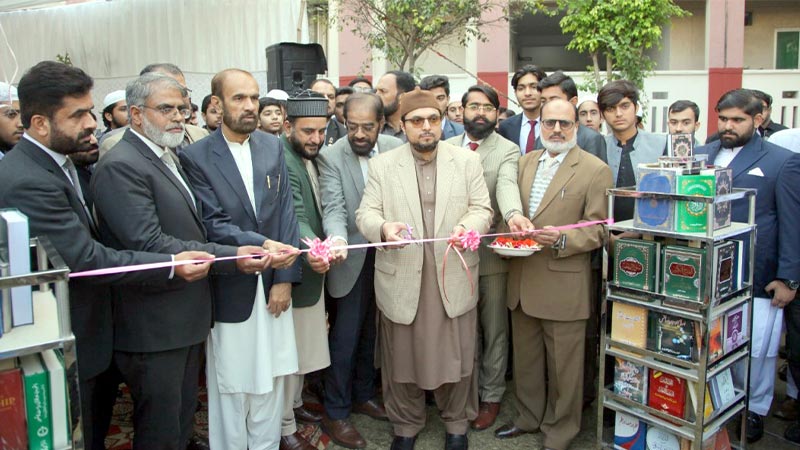
President of Minhaj-ul-Quran International, Prof. Dr. Hussain Mohi-ud-Din Qadri, while addressing an intellectual session on the topic of personality development at the College of Shariah and Islamic Sciences, said that without education and training, the unbridled horse of desires wounds the intellect. To strengthen and purify consciousness and thought, young people should include book reading in their daily routines. The role of teachers is vital and pivotal in education and character-building.
The MQI President said that Allah Almighty has created human beings with the best structure and perfect balance. The foundational mould of human creation is established upon goodness, purity, and an inclination toward virtue. The goodness embedded in human nature becomes stronger when it is supported by a righteous society, a wholesome environment, and effective training. This is why Islam declares the acquisition of knowledge obligatory and commands enjoining good and forbidding evil. If we correct ourselves but ignore reforming society, the forces of goodness will weaken, for human habits are not inherently fixed at birth.
At the conclusion of the intellectual session, Prof. Dr. Hussain Mohi-ud-Din Qadri also visited the specially arranged Book Fair, where books on various subjects were available for students at discounted prices. Students showed notable interest in purchasing books. The event was attended by Prof. Dr. Tariq Mahmood, Dr. Mir Asif Akbar, Dr. Engineer Muhammad Rafiq Najam, Dr. Mumtaz-ul-Hassan Barvi, Muhammad Ghafar, Khalid Javed, Dr. Ali Waqar Qadri, Rashid Hameed Kalyami, Iqbal Bajwa, Dr. Kashif, Iftikhar Shah Bukhari, Babar Chaudhry, as well as the faculty and a large number of students of the College of Shariah and Islamic Sciences.


Comment