
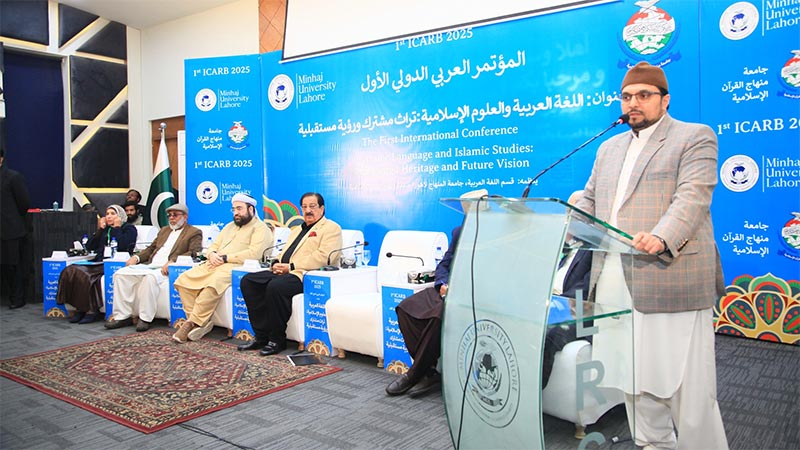
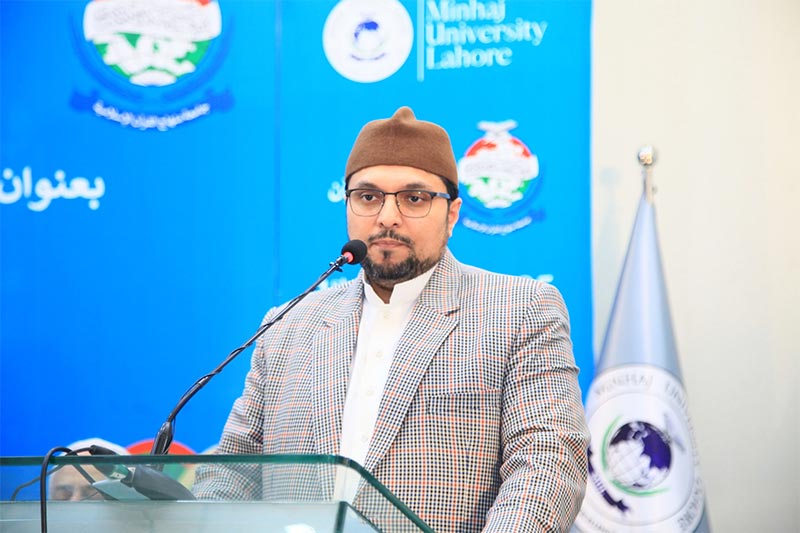
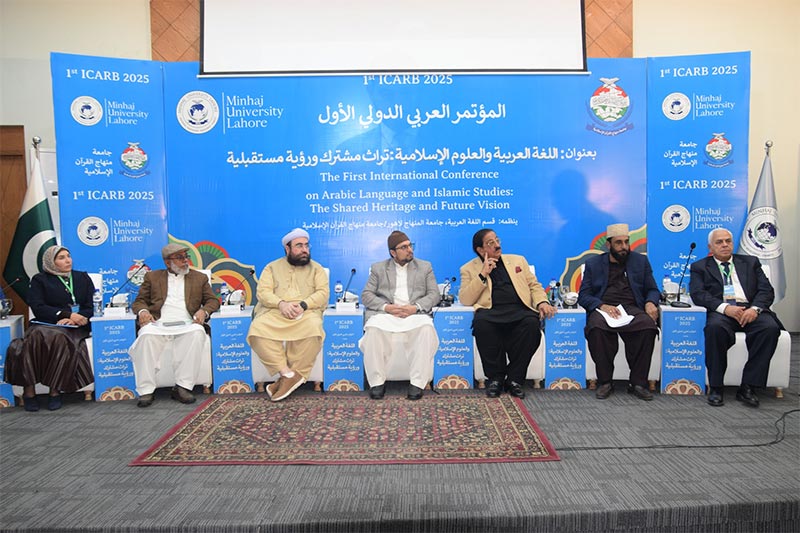
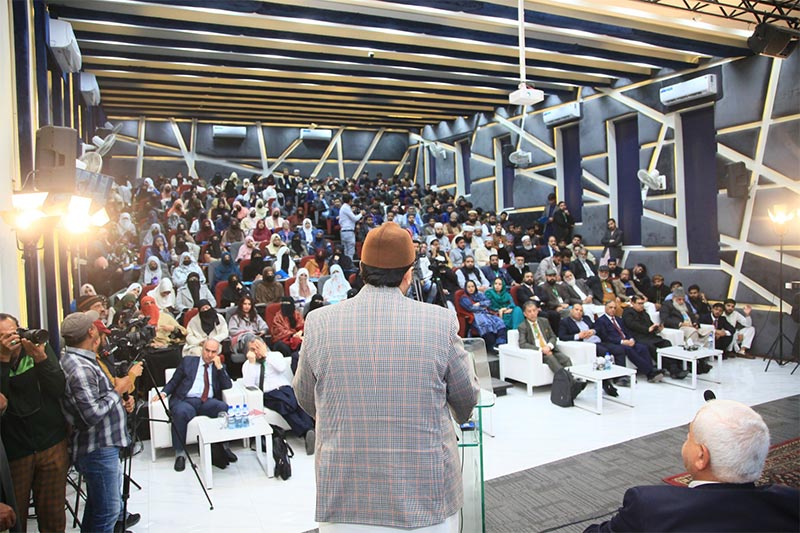
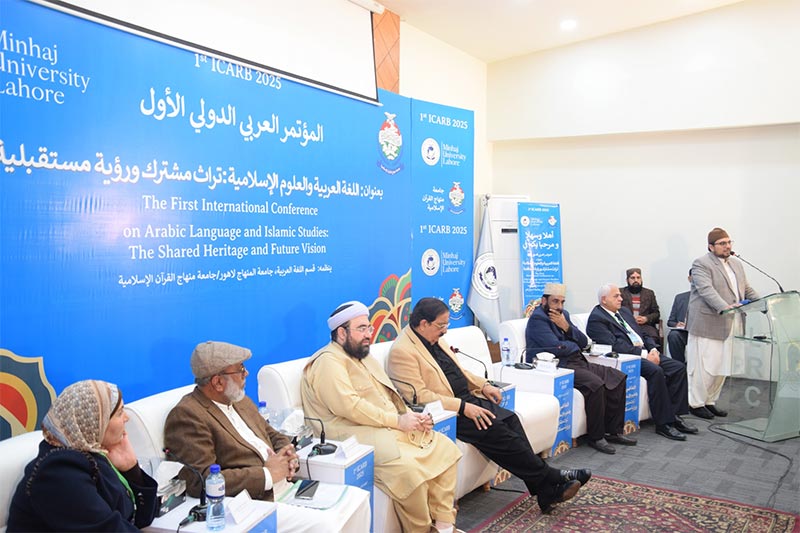
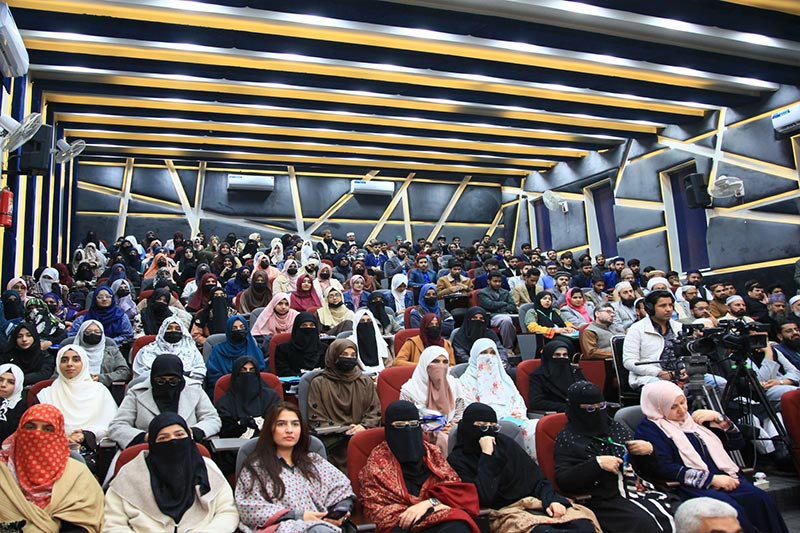
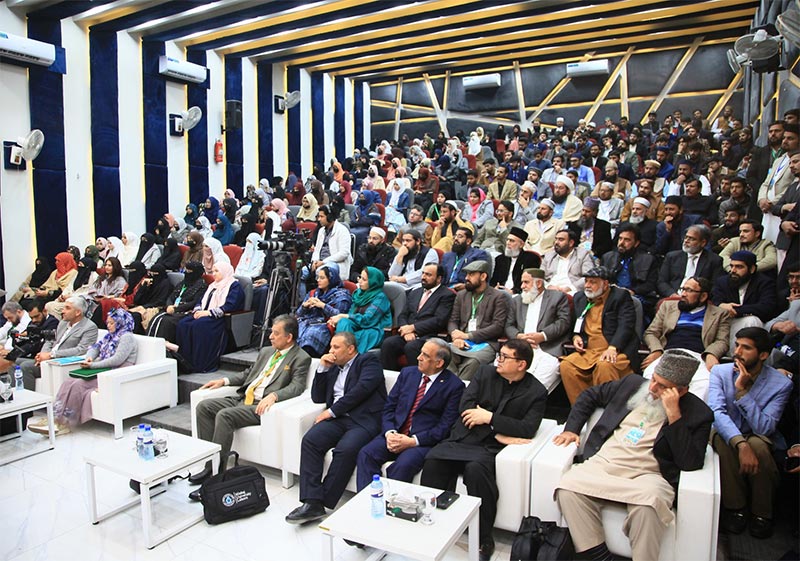
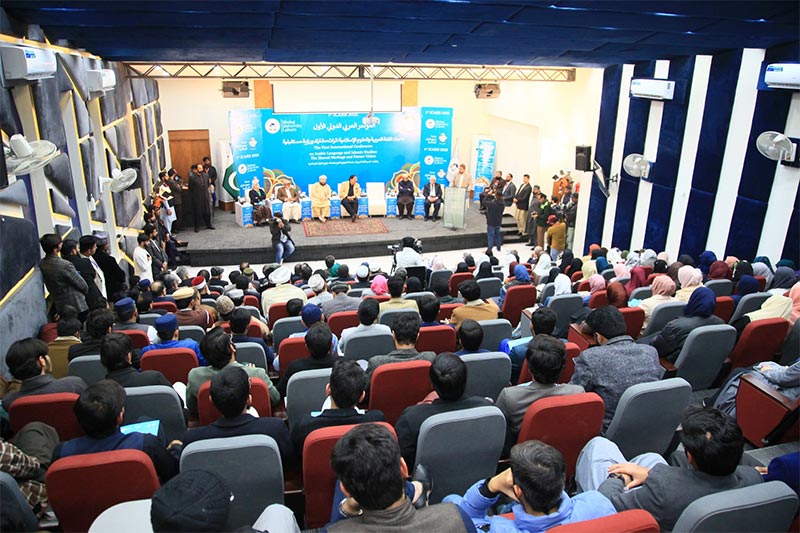
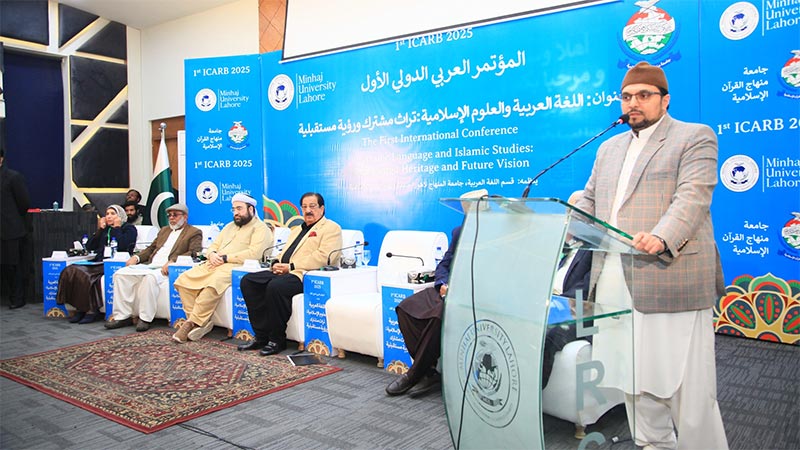
Prof. Dr. Hussain Mohi-ud-Din Qadri, Deputy Chairman (BOG), Minhaj University Lahore, delivered a profound and thought-provoking address during the conference, appreciating the active participation of national and international scholars, experts of Arabic language, and distinguished guests.
He expressed gratitude to the participants for making the conference a success and emphasized that such scholarly gatherings leave a lasting impact not only in Pakistan but across the global Arabic-speaking and academic world. He highlighted the unique status of the Arabic language as the language of the Holy Qur’an, stressing that Allah Almighty’s divine promise to preserve the Qur’an has also ensured the preservation, continuity, and authenticity of Arabic language, grammar, and literature over centuries—unlike many ancient civilizations and languages that faded with time.
Prof. Dr. Hussain Mohi-ud-Din Qadri further underscored that the unchanged structure and grammar of Arabic over the last 1400 years is a living miracle of the Qur’an. He noted that while languages like Latin and even English have evolved significantly, Arabic continues to be understood today exactly as it was at the time of revelation.
Addressing the future, he emphasized the urgent need to integrate Artificial Intelligence, digitization, and corpus research into Arabic and Islamic studies. He shared that Minhaj University Lahore’s Corpus Research Center, established in collaboration with the University of Shanghai, is currently working on more than 32 research projects related to Arabic, Urdu, and other languages using AI-based tools.
He announced that corpus research, computational linguistics, and digitization-based courses will now be formally introduced in the Faculty of Languages at Minhaj University Lahore, ensuring that graduates are not only experts in language but also equipped with modern technological skills relevant to the future.
Concluding his address, he highlighted the 40-year academic journey of Minhaj University Lahore, its diverse faculties, research centers, international collaborations, and its unique mission of producing graduates who combine modern knowledge with strong Islamic character. He congratulated the Faculty of Languages and the Faculty of Shariah & Islamic Sciences for organizing the conference and thanked all guests for their valuable participation.



Comment