
Speech No: Hl-46
Event: Itikaf 2023
Place: Itikaf City, Lahore
Dated: April 16, 2023
Category: Duroos e Khawateen
Speech By: Prof Dr Hassan Mohi-ud-Din Qadri
Description:
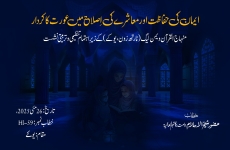
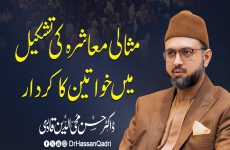
In this lecture, Professor Dr. Hassan Mohiuddin Qadri discusses the pivotal role of women in establishing a Mustafavi (Prophetic) society. He explains that a Mustafavi society is not formed through slogans or superficial reforms, but through strong moral character, education, spiritual awareness, and ethical upbringing—areas in which women play a decisive and foundational role. Drawing upon the Seerah of the Prophet Muhammad ﷺ, Dr. Hassan Qadri highlights that the reform of society begins from the nurturing environment of the home, the upbringing provided by mothers, and the intellectual and moral empowerment of women. He emphasizes that when women are empowered with religious understanding, ethical insight, education, and responsibility, they become key agents in shaping righteous generations, strengthening family structures, and maintaining social balance. The lecture further clarifies that a Mustafavi society neither marginalizes nor restricts women, but grants them honor, dignity, responsibility, and purpose, enabling them to contribute through education, moral development, and service to humanity. This video is a valuable guide for those seeking to understand Islamic social values, women’s empowerment, and the practical foundations of a Prophetic society.
In this lecture, Professor Dr. Hassan Mohiuddin Qadri discusses the pivotal role of women in establishing a Mustafavi (Prophetic) society. He explains that a Mustafavi society is not formed through slogans or superficial reforms, but through strong moral character, education, spiritual awareness, and ethical upbringing—areas in which women play a decisive and foundational role. Drawing upon the Seerah of the Prophet Muhammad ﷺ, Dr. Hassan Qadri highlights that the reform of society begins from the nurturing environment of the home, the upbringing provided by mothers, and the intellectual and moral empowerment of women. He emphasizes that when women are empowered with religious understanding, ethical insight, education, and responsibility, they become key agents in shaping righteous generations, strengthening family structures, and maintaining social balance. The lecture further clarifies that a Mustafavi society neither marginalizes nor restricts women, but grants them honor, dignity, responsibility, and purpose, enabling them to contribute through education, moral development, and service to humanity. This video is a valuable guide for those seeking to understand Islamic social values, women’s empowerment, and the practical foundations of a Prophetic society.



Comment